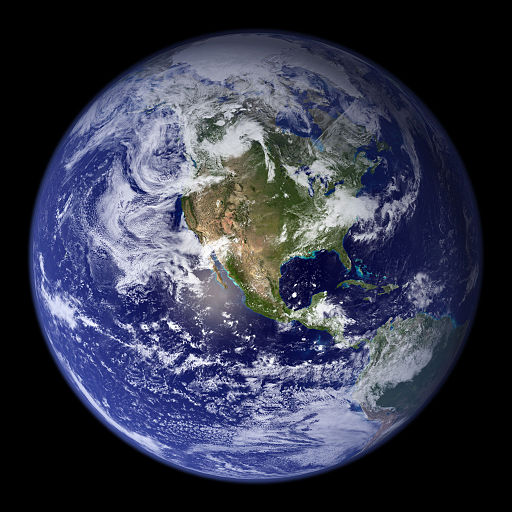
We are all guilty of thinking of problems in isolation. In joined up thinking, as an educator, I am proposing that we help students, and indeed educators, to see the big picture, to identify the links between components of the picture and to examine how they interact to form a system.
Systems Thinking

Systems thinking is a core element of the IB course I teach, Environmental Systems and Societies. Although it’s been around as a concept for a long time with Donella Meadows incorporating this into the interface of UN policy around sustainability in the 1970s and Peter Senge using it as one of the five disciplines of a learning organisation in the 1990s, there is a growing array of tools and thought pieces promoting the use of systems thinking. The reason being that we are faced with enormous challenges that cannot be solved by taking any one problem in isolation. Eating less meat may help reduce your personal carbon footprint but it won’t solve climate change on its own. Wearing masks at work may reduce the risk of COVID-19 transmission but it won’t reduce the chances of another zoonotic disease arising as our ecosystems are stretched to collapse.
Skills and Tools for a Mission
The International Baccalaureate in its mission statement aims “to create a better and more peaceful world through intercultural understanding and respect” and I’m lucky to work in a school, ISZL, which states that “we are a community of learners determined to make the world – or our corner of it – a better, kinder place”. In order to do these things, it seems essential to help students develop the tools needed for this. Systems thinking is, for me, the most important of these tools although it would be foolish to claim that this isn’t related to a multitude of other skills and tools. The OECD in its Learning Compass for 2030 identifies systems thinking as one of the key skills for 2030.
Socio-Emotional Learning


How can we help students go beyond the lessons from the parable of the blind men and the elephant where we only see the parts but not how they are connected to form the whole? The IB has been working on this for some time and is at the forefront of this joined up thinking. They were involved in the development of the Compassionate Systems Framework which Peter Senge himself has instigated. What I like about this approach is its emphasis on the development of socio-emotional Skills to help solve problems. Peter Senge in his book, the 5th Discipline, explores the idea of personal mastery. Helping students to develop an awareness of their emotions, i.e. developing their “personal mastery”, is key to them being able to tackle the big global problems of today.
Strategic Intelligence
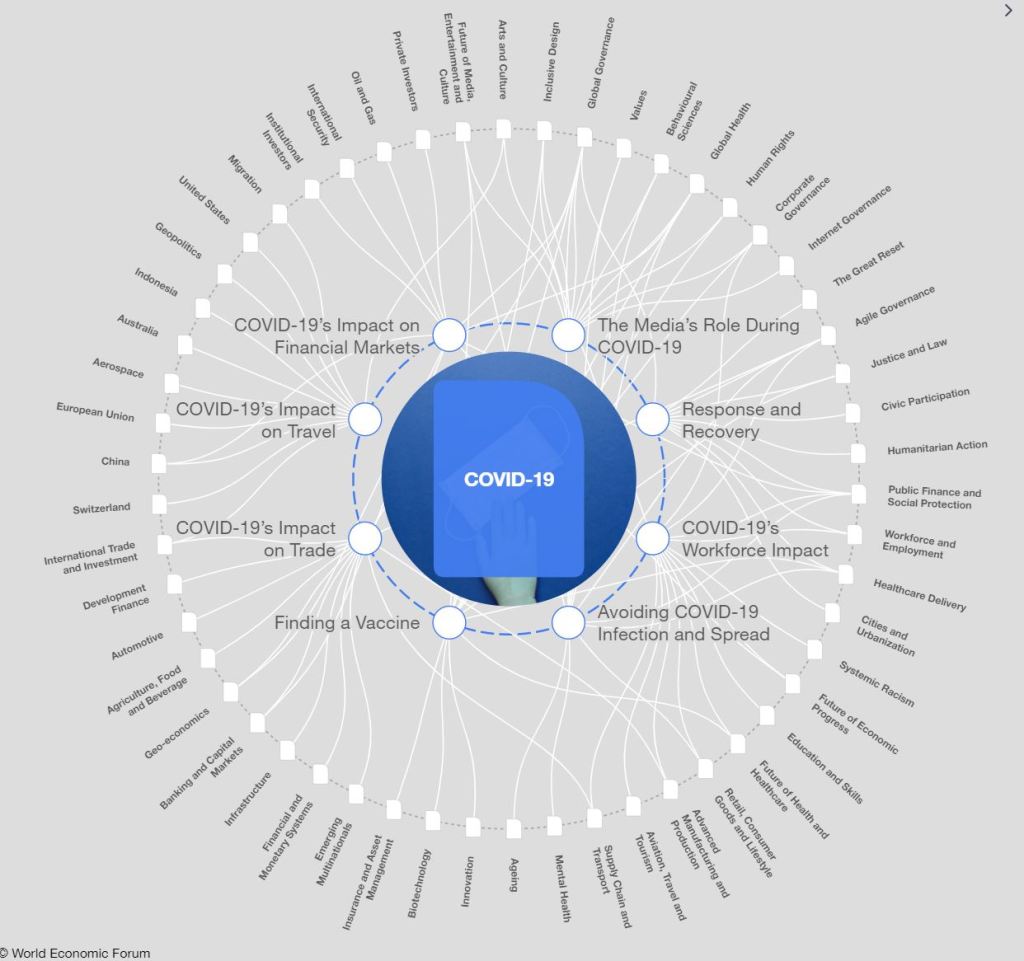
The World Economic Forum has also been working with the IB to develop systems thinking tools to explore the complex problems we face. Their website Strategic Intelligence provides transformation maps with links to interconnected topics while exploring a problem through a particular lens. This could be a great tool for teachers and students, providing resources that interconnect to the key problem under investigation.
Seeking Creativity – Interdisciplinary Teaching

The sad passing of Sir Ken Robinson, reminded me of the lessons that Sir Ken has been teaching. Silos of subject areas do not lead to the creativity we need to solve these globally complex problems that we face.
We strive for interdisciplinary approaches to teaching in the IB Diploma Programme. It’s not as easy as it should be and Environmental Systems and Societies is a course that is designed as a way to explore ideas from a holistic viewpoint, looking at different perspectives, but the key to interdisciplinarity for all Diploma students is the Theory of Knowledge (TOK) course. TOK provides “an opportunity to explore and reflect on the nature of knowledge and the process of knowing”. It provides a means to explore assumptions underlying a behaviour or area of knowledge which can help “overcome prejudice and promote intercultural understanding” (IBO, 2020).
This brought me back to Peter Senge’s concept of personal mastery and, of course, systems thinking. If we are to have any hope of finding solutions to the globally complex problems we face, climate change, ecosystem collapse, and a world that fails to provide for the needs of societies and lives beyond its planetary boundaries, then we need to promote joined up thinking and that must happen in our schools.
 zoesenvironment