
It took about 8 minutes for George Floyd to die with a police officer kneeling on his neck. Over 20 times, he said, I can’t breathe. Imagining how this might have felt takes you to a very dark place but what is even darker is to remember all the black lives that have been lost at the hands of people who are supposed to keep the peace.

Reading Malcolm Gladwell’s Talking to Strangers, I learned the story of Sandra Bland. Another tragedy. A woman, a political activist, who knew her rights, who had moved states to start a new life but by force of chance met the wrong police officer at the wrong time, pulling her over for not signalling as she moved out of his way. She took her own life in her darkness in the cells after her detention. Another life, a black life, lost.

Going back in time, you can learn how, in America, the police stem from the bands of men who chased down escaped slaves. The most horrific tale I have read of this time is Colson Whitehead’s The Underground Railroad which describes the flight of Cora from a Georgia cotton plantation, fleeing from state to state on and with the help of the underground railroad. The description, as she watches a public lynching of a black man, still makes my skin crawl. Colson Whitehead’s next book, The Nickel Boys, set in the Jim Crow South of the 1960s, reminds us how recently the law allowed for the horrific treatment of young black children while, at the same time, being inspired by Dr. Martin Luther King’s words that you are “as good as anyone”.
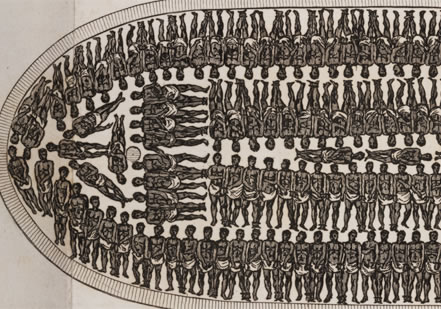
The context is different in the UK, the colonial power which sent ships to Africa to collect African slaves to work on the plantations growing cotton, tobacco and sugar. Even after the banning of slavery in the UK, economic growth was powered by enslaved black people in the Americas and Caribbean. As a white British woman who thought herself “well-educated”, I have come to understand how blinkered my formal education was. Reading, well, listening actually, to the powerful, angry voice of Reni Eddo-Lodge as she explains Why I’m No Longer Talking to White People about Race, I understood that to just think of myself as not racist is not good enough; I have to find ways to stand up against racism and break down the systemic racism that infiltrates the whole world.
There’s a movement to decolonise the IB. I’ve been thinking about this. It must vary so much from school to school. I know that at ISZL our IB Diploma TOK, English Language and Literature, Global Politics, Geography, History and ESS courses all have good examples of more diverse perspectives but is it enough? Do we actively encourage the exploration of themes of equality, of intersectionality, of the meaning of systemic racism and where it has come from? How can we improve? We certainly need a more diverse workforce but we also need to take stock of where we are now with our curriculum and service projects.
As IB DP Coordinator, I need to ask questions and to explore where are our strengths and where can we improve. I’m going to ask for help from the students. A colleague, Jacqui Harris has started an intercultural understanding student group. A curriculum audit with the students perspectives would be a place to start but what questions should we ask? Are women’s voices heard? Are black voices heard? Do we explore gender identity? We all need to ask fresh questions of ourselves and our courses. Building on ISZL’s mission to make the world, or our corner of it, a better, kinder place and remembering that the IB’s mission also includes “through intercultural understanding”, we can do better. One step at a time, we are going to breathe more kindness, thought and understanding into our education practice.
 zoesenvironment
One Comment Add yours