
I recently attended a panel discussion on Race and Privilege. It was a thoughtful and interesting discussion, treading on some delicate areas such as should we feel guilty for our privilege. Following the panel, in our own school, I commented that I was surprised that the panelists (at least the educators) were white males, though Nick Alchin could rightly dispute this. The students in the room didn’t think this was a problem, and they were right on one hand, but on the other, why do they think this is alright. Why aren’t they questioning that the panel didn’t include a female or more diversity. Are they so used to the normal being white and male?
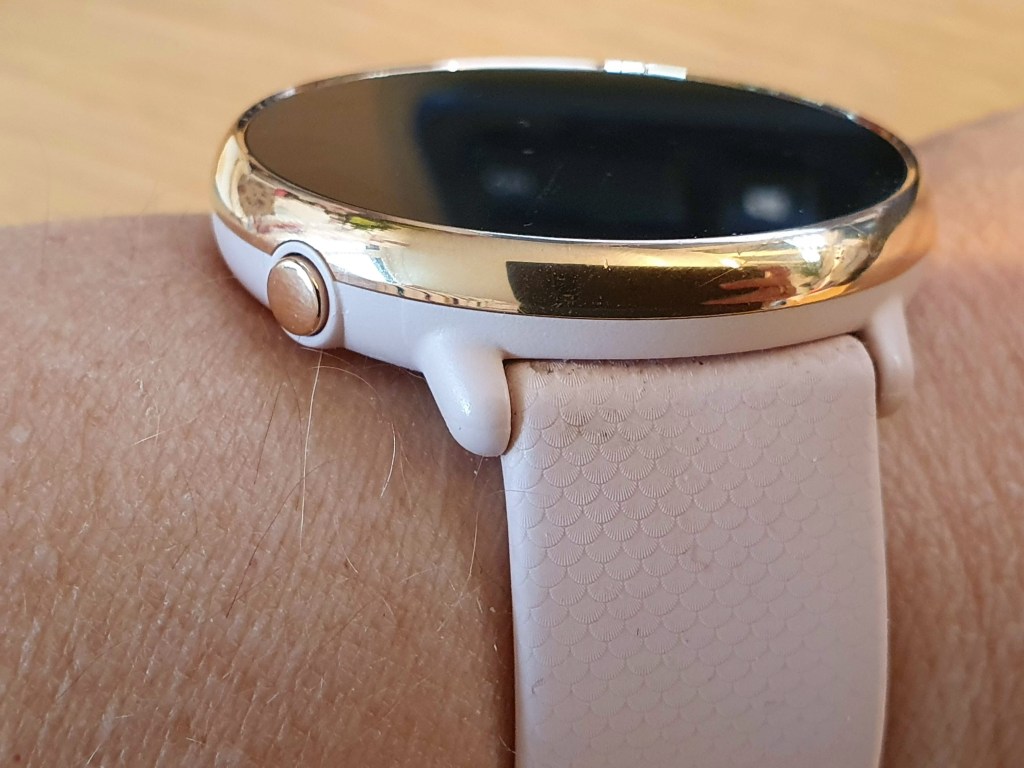
My husband bought me a watch for Christmas. It was the female version of the watch he was using. It was pink with rose gold. The watch monitors your activity, helps you set fitness and sleep goals. It functions by having sensors in the back of the watch that form a connection with your skin surface. I like my watch but it doesn’t work properly for me. I can never get it to perform the tests it has inbuilt. Guess what, the watch face and sensors are exactly the same size as my husband’s. The female version is exactly the same size as the male version but it’s pink. Now wonder why the sensors never fit snugly on my skin around my wrist.

I’m not sure I would have questioned this; examined the functionality of the watch without having read, “Invisible Women” by Caroline Criado Perez. In one chapter, “One Size Fits All” she explains how things that are unisex are designed for 50% of the population, the ‘default male’. This starts to become insidious when you realise that machine learning and artificial intelligence just reinforce this bias as the databases that they search to learn are predominantly filled with male data. Research has shown that “Google image searches will under-represent women across forty-five professions tested with CEO being the most divergent result: 27% of CEOs in the US are female, but women made up only 11% of the Google Image search results.” And returning to my fitness watch, the algorithms underestimated female steps (Criado Perez, 2019, Chapter 9).

Yet inclusive leaders are good for organisations (Bourke & Titus, 2019). They explain that “teams with inclusive leaders are 17% more likely to report that they are high performing, 20% more likely to say they make high-quality decisions, and 29% more likely to report behaving collaboratively.” Throwing diverse people, gender, cultural background and age together though, does not produce these results without inclusive leadership. The traits needed to be an inclusive leader, according to Bourke & Titus (2019) are a visible commitment to inclusivity, humility, awareness of bias, curiosity of others, cultural intelligence and effective collaboration.

A Times Educational Supplement article by Vivienne Porritt about “How to Recruit a More Diverse Leadership Team” provide some great pieces of advice in the article but the one I remember is to anonymise the process of recruitment. Alongside this, check your organisation’s gender pay divide and check for gender bias in job adverts using a gender decoder service. Unfortunately, even the word leader has a male bias. Ensure the interview process and panel are diverse and provide fair feedback to all candidates.
I wonder if this anonymisation is strong enough but it makes a start in balancing the inequalities of the myth of meritocracy (Criado Perez, 2019). When the New York Philharmonic Orchestra started blind auditions in the 1970s, their percentage of female musicians went from zero to ten percent in a decade (Goldin & Rause, 1997, cited in Criado Perez 2019). What it doesn’t do, is overcome the bias that women don’t tend to nominate themselves as often as their male counterparts (Hopkins, 2006 cited in Criado Perez 2019) and that workplace gender quotas do work (Chapman, 2017 cited in Criado Perez 2019).

Although I believe we need more women in school leadership positions, we can still teach our male colleagues something, if they’ll listen. There has been much written about how female led democracies have dealt with the 2020 Covid crisis better than their male counterparts. Research showing that they tend to have inter-personally-oriented styles rather than task-oriented styles. Tomas Chamorro-Premuzic and Cindy Gallop (2020) provide seven leadership lessons that men can learn from women.
- Don’t lean in when you’ve got nothing to lean in about. Go for competence over confidence.
- Know your own limitations. Women are generally less confident than men. This allows them to spot gaps and ensure preparedness.
- Motivate through transformation. Women are more likely to lead through inspiration, aligning with meaning and purpose, leading with both EQ and IQ.
- Put your people ahead of yourself. Men are generally more self-focused than women, they are more likely to lead in a narcissistic and selfish way so adopt a less self-centered style of leadership.
- Don’t command; empathize. 21st century leaders excel when they form an emotional connection with their followers. This is something that women do more naturally.
- Focus on elevating others. Female leaders are more likely to coach, mentor and elevate others through strategic relationships which promotes effective cooperation in teams.
- Don’t say you are “humbled”. Be humble. This means acknowledging ones mistakes, learning from experience, taking on other perspectives and being willing to change and get better.
I started this blog by considering the damage that is done to students who become used to seeing only white, male panels or “experts” and the challenges of a world that is based on male data, forgetting that the world is 50% female. Leadership requires more females and more diversity but it also needs men to learn from their female counterpoints, to value inter-personal cultures over task-oriented cultures and the skills needed to generate these cultures.
 zoesenvironment
One Comment Add yours