
2020 has been a hard year. Everyone has experienced the lockdowns, social distancing and mask wearing challenges. As a teacher in Switzerland, I’ve had to live with an attitude to the control of this pandemic that conflicts with my personal beliefs. As a biologist, I’ve had to practice mindfulness as those around me demonstrated a lack of understanding of some basic physical laws such as particle theory and diffusion. But this is not so different to many others. In my 50th year on this planet, a chance blood test identified that something wasn’t right in my body. I’ve now had x-rays, CT scans, MRI scans and a PET scan with radioactive glucose injected into my body. I’ve met with consultants for Ear Nose and Throat, Haematology and stuck with my rheumatologist. Fortunately all the scans have revealed that I have no physical manifestations but my blood results still show that I have significant levels of an inflammatory response yet to be diagnosed. If that wasn’t enough, my father was admitted to hospital in November for investigations after collapsing but contracted Covid-19 in hospital and died within 24 hours on the 5th December.
As we enter 2021, I’ve been reflecting on what I’ve learned this year and what I could share that might be useful for others. 2020 turned out to be the year that my reading re-ignited. I’d finally succumbed to audiobooks and this doubled my reading capabilities. The lockdown was also a good thing for my professional development as I took advantage of the free webinars and online courses offered by providers like Chapters International. I am a curious soul with a voracious appetite for learning and so I have loved these opportunities. This characteristic leads to my core value of promoting life long learning and professional development for all. So what lessons have I learned?
Ecological Collapse

Life is the ultimate complex problem. Ecological systems have evolved over millions of years to consist of a network of interactions between species and their physical environment. Some of these systems may be simpler, involving less interactions due to lower productivity but no real system has been effectively mapped by scientists. They are just too complex. What we do know, however, is that when we, humans, simplify these systems, they don’t function as well and as we interact with these simplified systems there are new emergent properties. Covid-19 is symptomatic of this paradigm. Zoonotic diseases are those which have crossed from other animals to humans. 75% of all emergent infectious diseases are zoonotic and the result of greater human interaction with new and simplified ecological systems and unsatisfactory farming conditions. Increased trade in wildlife and the use of “wet markets” where live animals (both wild and farmed) are a symptom and a cause. Poor communities needing cheap sources of protein exploit the local forests but the local forests are already collapsing, with a greater number of species that are more likely to transmit diseases to humans, such as bats and rodents. An increasing area of research is the links between security, economics and biodiversity and ecosystem services. Swiss Re, the insurance firm based in Zurich, recently published findings that a fifth of countries are a risk of ecosystem collapse and the UN has found that not a single one of the goals to stem the destruction of wildlife and ecosystems has been met in the last 10 years.
I haven’t even mentioned climate change which speeds up the simplification of ecosystems as they struggle to adapt to the pace of change needed. It’s no wonder that many people are suffering from symptoms similar to post traumatic stress disorder. I was moved by Eric Holthaus’ description of how he has required therapy to try and cope with the knowledge he has acquired as a meteorologist focusing upon climate change in his interesting book The Future Earth: A Radical Vision for What’s Possible in the Age of Warming. This book, along with The Good Ancestor by Roman Krznaric, attempts to outline what must happen in human societies to adapt to our changing world. Both build upon the earlier work by Kate Raworth and her radical but obvious solutions of Doughnut Economics which in 2020 evolved into an Action Lab with small and big societies around the world signing up.
In a recent interview for a position at our school, a candidate used The Overstory by Richard Powers as a salient tale but I was struck by their apparent reluctance to accept that angry, even violent protest, is a valid response to the current ecological crisis. It seems to me that we all have the right to be angry with the intransigence of the current political and economic status quo, especially young people. Of course we should also teach ourselves and our children to understand our emotional landscapes and to find ways, like the beautiful online tool The Ekman’s Atlas of Emotions, to navigate and express ourselves.
Well-being
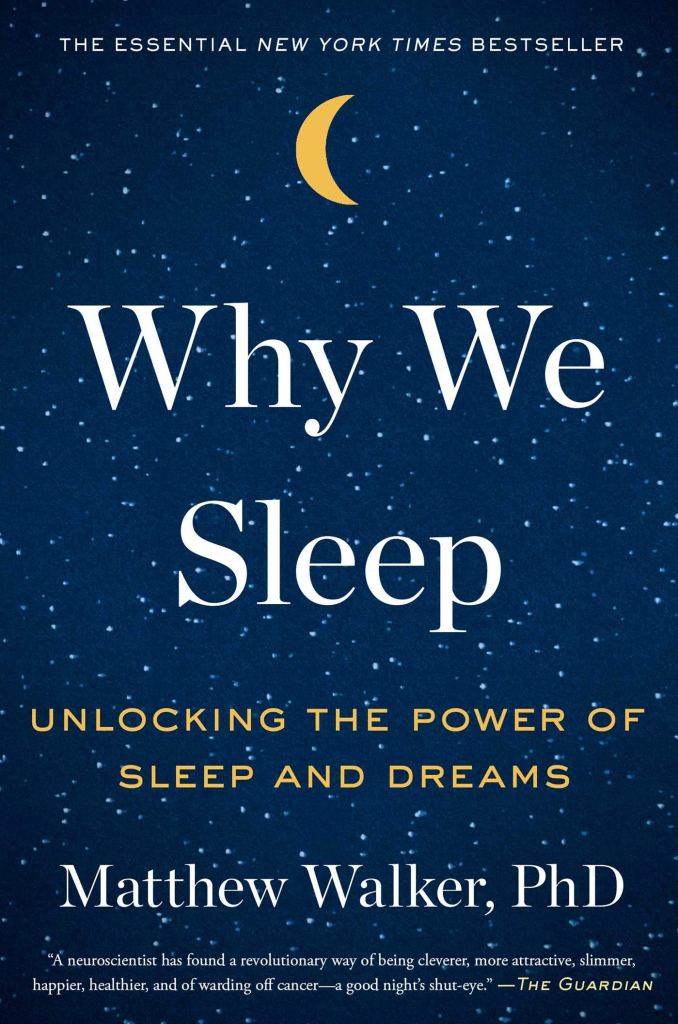
I have struggled to keep myself mentally healthy this last year which undoubtedly was in a feedback loop with my physical health. I found it difficult to stay balanced when decisions on my own well-being were so connected with how others chose to behave. Reading James Nestor’s Breath helped me to focus on my own breathing and I have retrained myself to breathe through my nose and to breathe deeply. This seems to have had the physical benefits of a more relaxed diaphragm. Daniel Davis’ The Beautiful Cure, which I’ve just read over the new year, reminded me of the complexity of our immune system but also its interactions with our mental health and sleep. A book I would highly recommend for all of us working in education (at least) is Why We Sleep by Matthew Walker. This book recounts the research behind the biology of sleep but then many of the impacts of decisions we make in how we organise our societies, including education and health. This seems like an essential part of any social-emotional learning (SEL) programme.
I finished the year reading Explaining Humans by Camilla Pang, a young scientist with diagnosed Autism Spectrum Disorder (ASD), Generalised Anxiety Disorder (GAD) and Attention Deficit Hyperactivity Disorder (ADHD) and a Ph.D. in biochemistry. The book had just won the Royal Society’s Science Book of the Year. It gave me an insight into how a smart woman with a love of science has learned to navigate the world and what it might feel like to have these disorders but the science was used as analogies rather than explanations and so left me unsatisfied.
Having the opportunity to complete the Introduction to the Compassionate Systems Framework in a four day intensive online workshop from the Center for Systems Awareness was a real treat. This reminded me of the value of guided meditation, positive psychology and visualisation techniques. It also introduced me to tools that help unpick the social and emotional elements in a system, for system change and leadership. Looking back at my notes, I’m reminded of the complexity of these ideas and how challenging it is to internalise and practice all I’ve been introduced to. This is definitely a work in progress but I would recommend this training to anyone interested in leadership and socio-emotional learning but who is also open to new ways of addressing their own emotional landscape.
The International Baccalaureate published an excellent summary of research on “why wellbeing matters during a time of crisis”, highlightling three areas for consideration, 1) dealing with fear and anxiety, 2) managing the feeling of being behind and 3) dealing with uncertainty. They make quite a few suggestions about how to prioritise well-being for all community members. It would seem wise for any school to put this as their central goal and to make sure that every team is asking, addressing and revisiting these questions. One thing that I have noticed is that there is a lot of cognitive dissonance associated with this aspect of school life.
Leadership

I’ve thought a lot about leadership this year and my last blog explored women in leadership, inspired largely by Caroline Crialdo Perez’s Invisible Women. Reading provides me with a lot of the source of my empathy learning and we started a curriculum audit including students’ perspectives on the issues associated with the Black Lives Matter movement. To help my own learning I found Why I’m No Longer Talking to White People About Race by Reni-Eddo Lodge helpful and David Olusoga a constant sage. Fiction by Bernadine Evaristo, Ta-Nehisi Coates and Chimamanda Ngozi Adichie and Trevor Noah’s autobiography, Born a Crime all helped my understanding.
I’ve made some mistakes this year, breaking my cardinal rule of “don’t press send” too quickly, no doubt under the immense pressure of wondering if I had a tumour or how my dad was doing in hospital in another country. In the end though, I read Barack Obama’s A Promised Land and enjoyed his calm logical approach to problems, fired by an intense ambition to make his country a fairer, better place. He showed how complex the problems were and how much pragmatism was required to shift the dial a little, if not enough. I was particularly tickled by his ability to recognise the need for diversity in skills and personalities and how he described the impatience he witnessed in others but also the value and love he placed in these people, despite their shortcomings; and with that, I felt a little better about my own shortcomings.
 zoesenvironment
Reblogged this on Autism Candles.
LikeLike