It was this time last year that I last blogged, so this blog comes with a warning, that it should really be several focused blogs – there are so many ideas to connect. It’s complex. That reflects the year I’ve had and the priorities I’ve made. It’s continued to be tough but half way through the year, after invasive tests to rule out the worst things you can imagine, my suspected autoimmune condition got a name and in August I started treatment. No magic bullets; it’s work in progress but it has shaped my year and my decisions. I didn’t wait for a New Year but set a priority back in the summer; that was my wellness. I started working with a personal trainer, a psychiatrist, having a weekly massage, and e-biking the 10 km to work and back most days. I’m lucky to have these options.
My personal and professional learning weave environmental systems with systems awareness and this year I’ve deepened this with the crossover into leadership and personal growth using strengths and values analysis and exploring who I really am; after all I am now fifty, isn’t it about time I worked that out! Maybe some of this learning and reflections can help others and provide you with resources to explore.
Stuck in the Anthropocene

I read two books that gave me great inspiration for my work as a curriculum designer and teacher of Environmental Systems and Societies, The New Climate War by Michael Mann and Under a White Sky by Elizabeth Kolbert. Mann is a seasoned warrior of the climate wars having been the scientist who presented the hockey stick model for climate change featured in many documentaries. He documents the demise of [climate change] denialism and the adoption of other tactics by those who want to avoid societal change, such as delay, distract, divide and doom. Mann explains in detail the misinformation campaigns I first learned about in George Monbiot’s Heat, gives the case for a price on carbon, takes down individual action over collective action and shows how the youth climate movement may be an important part of the social tipping point away from fossil fuels. His argument against promoting individual action is that it is just giving an excuse to avoid the societal change needed. I take his point and always try to make the case for system change but I will continue to advocate for individuals to be the change they want to see in the world. I mean, that’s what Greta Thunberg lives, doesn’t she?
Under a White Sky is a brilliant book and Kolbert is a master story teller. There is a reason why The 6th Extinction is at the top of lists of the best non-fiction books of the century. In this latest book she looks at the idea that humans have gone so far messing up the environment, they might as well throw more human technological solutions at it (a true anthropocene mindset). There are three sections, water, biodiversity and climate change with invasive species weaving their way through all sections. It’s a depressing but compelling read. I produced two case studies for students based on this book (please note these are on a subscription site but I’ll make them free for the month of January). The first is the pure craziness of the Chicago River. The Chicago River was part of the Great Lakes watershed and flowed into Lake Michigan until the late 1800s. It flows through the centre of Chicago in the Chicago Loop. It now flows backwards and connects to the Mississippi watershed. This means that the (three) invasive species of Asian Carp now have the potential to enter the Great Lakes ecosystem and decimate the already stretched ecosystems with their own invasive species. US engineers have so far resorted to more and more technology to try and prevent this pending ecological disaster. The second details the sad state of the Great Barrier Reef and the technological solutions that are being prepared to try and save what the very same scientists seem to doubt can be saved. These solutions include what they call assisted evolution where corals and their associated algae are bred at extreme predicted ranges of temperature and acidity to be able to select and breed resilient species.
To give me a bit of hope, I turned to the reintroduction of beaver in the UK. Here the story is the recognition that there are nature based solutions to increase the resilience of ecosystems. Beavers are ecosystem engineers (don’t we like anthropomorphic terms for nature) that change ecosystems through their dam building, slowing down the flow of water, increasing biodiversity and providing the ecosystem services of flood reduction and carbon storage. They increase the resilience of ecosystems in ways that are regenerative.
Regenerative Social Ecosystems
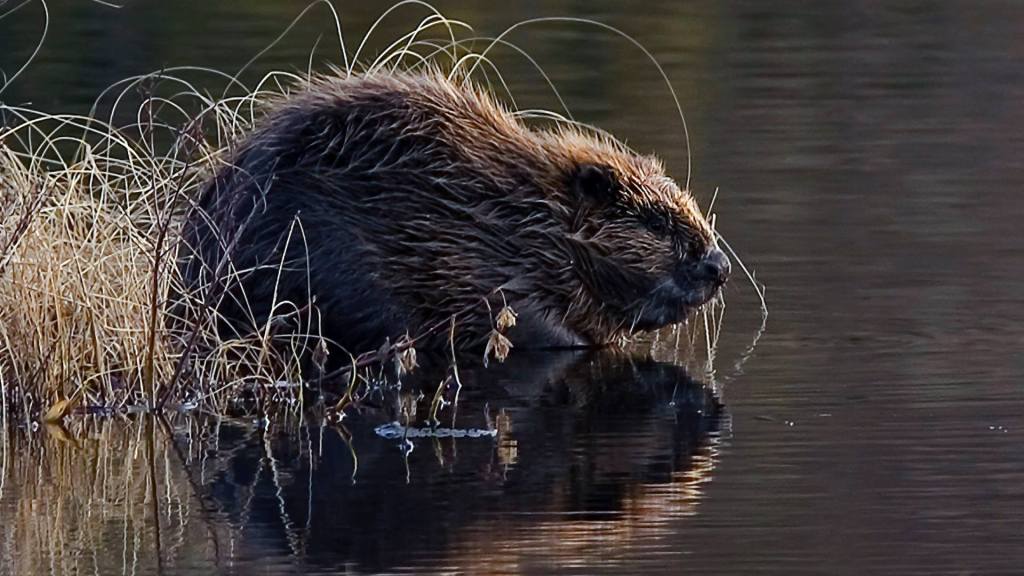
As a school we decided to focus on producing a definition of international mindedness and global citizenship as part of our strategic goals this year and for our programme development plan (pdp) as part of our IB evaluation. This has been a rich exploration so far with our curriculum leadership team participating in an a CIS workshop on Advancing Global Citizenship which helped us develop our thinking. We wanted to pull together our work with compassionate systems, socio-emotional learning, service learning, IDEA (Inclusion, Diversity, Equity and Anti-racisim) and decolonisation. Seems like a tall order? Most definitely. Many others in a variety of realms are thinking these things too. Back in 2016, Jane Drake presented her work through the IB on nurturing international mindedness which we revisited recently, Conrad Hughes, Campus and Secondary Principal at the International School of Geneva, La Grande Boissière writes in a blog for CIS about decolonising the curriculum and provides a useful historical lens on the biases of curricula with their intentions to sell a particular national narrative or set of world views. For me, there was not enough of a consideration of the need to decolonise the economic and social paradigms. An article in The Conversation from Lyons, Thompsett and Hill (2021) about regenerating universities triggered my thinking in this case. Some of suggestions from this article I highlight are the need to decouple from “market-oriented extractivist ideas of growth”, to resist “job-ready” graduate tropes”, incorporate “indigenous rights and knowledge in curriculum”, “foster cultures of appreciation, generosity and collaboration” and cultivate “genuine and inclusive communities of learning”. Another blog for CIS by Leo Thompson explores the understandings, values and competencies required for exploring GCIU (global citizenship and intercultural understanding) and looks for the links to sustainability in this time of pandemics. We need to think of our school ecosystem as regenerative; producing learners who are ready to go out into the world and build dams, increase biodiversity and give more than they take, like our beavers.
Regenerative Leadership

Before we can truly help others we need to look inwards. At least that’s what I’ve been doing this year in order to deal with my autoimmune condition and to increase my resilience which has been tested so much in the past few years from many different fronts, personally and professionally. My psychiatrist suggested I take a strengths test from Via Institute on Character. The idea is that you then focus on your top five strengths to build positive psychology, increase happiness and reduce stress amongst other benefits. I have found that this has given me an affirmation of who I am and I hope will help me be my authentic self in difficult situations. For those interested, my top five strengths are Love of Learning, Appreciation of Beauty and Excellence, Perspective, Honesty and Curiosity. I can also recommend trying out the ECIS free mentoring service. It’s particularly rich in supportive women’s ed mentors. I had my first conversation this week and it promises to be solution and growth minded. Alongside this I’ve been listening to Brené Brown’s Dare to Lead and trying to figure out where I can work on my vulnerabilty and courage, where my shame stems from and how I can build trust. I do like how gives very practical solutions to try, such as identifying your core two values and how to use these to cope with negative feedback or difficult conversations. I’m still processing this and will need to return to the written version of the book but one think she suggests and which I returned to was to keep a gratitude diary to help see the joy in life.
As often as I can, I participate in the Center for Systems Awareness global calls which are open to graduates of their Compassionate Systems training. We always start with a guided meditation and some journaling to record “what’s moving inside us today?” and a guiding question such as “what do I want to grow?” This has complemented my learning through the strengths test and on vulnerability. I’m now looking to see how I can use the tools from compassionate systems with our older students who are often not at ease with themselves, not comfortable in their own skins. Wouldn’t it be a gift to give these students rather than having to wait for some crisis later in life. I’m going to combine three ideas to start. The first is the Wheel of Emotions which helps you articulate your emotions and put words to how you feel. The second is to choose a word for 2022 which one of my co-explorers in a compassionate systems breakout room share, and the third is the tool stocks and flows for which I will use the prompts What will you fill your store with? What will you let go? What can you control?
I enjoy listening to Tim Logan’s podcasts on Future Learning Design. One that particularly resonated with me was the interview with Giles Hutchins and Laura Storm on Regenerative Leadership. They talked about the need to grow our connection with nature, nurture feminine characteristics (holistic and compassionate), explore our inner world, the importance of inner sustainability (thriving, wellness, health) and celebrating and building strengths of holistic systems, interconnectedness, creativity, intuition.
It’s all Complex
So the threads are there; environmental systems, compassionate systems and regenerative leadership. It’s starting to make sense but let’s see where it takes me next. My love of learning is constantly affirmed by my reading and listening and if you are interested in seeing how I’ve been sustaining my inner world then here’s my Goodreads list for 2021.
 zoesenvironment