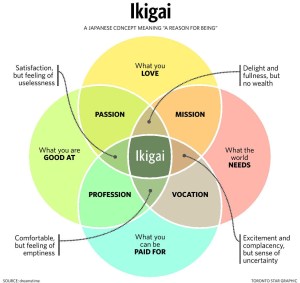
When I look back on this last year I see a theme of identity and an exploration of who I am. There are a number of reasons for this. My diagnosis with Sjogren’s Syndrome, an autoimmune condition led me to question what I thought I knew about myself and I had difficulties with some senior colleagues who questioned my identity and values. Can you really be “too IB” in an IB World School? On the other hand I put into place some strategies that would help me explore and strengthen my core values and reset my vision. These were working with two mentors external to my school and psychologists, participating in the ECIS Middle Leader Certificate courses, leading workshops for ESS teachers, focusing on curriculum development work for the IB and participating in my first in-person IB global conference since 2018. I should also acknowledge that having a new HS Principal has been invigorating and an intellectual stimulation.

Sjogren’s Syndrome leads your body to attack itself and particularly exocrine glands (those that produce solutions). I was diagnosed because I didn’t produce any tears in response to the Schirmer test and a biopsy of my lip salivary glands showed that they were infiltrated with white blood cells (lymphocytes) alongside the very high levels of inflammation that were present in my blood. This condition was picked up by chance as I wanted to see if I’d had Covid. Now, every time I see my immunologist, I am asked, “how are you?” and I have to think hard about how I am. I hadn’t recognised that I was ill before being diagnosed and so how well do I know myself? You have to learn to trust yourself but not to become too preoccupied with yourself. This is a hard balancing act. Sometimes I’m right, like when I told my doctor that I thought my inflammation indicators would be raised again or when I said I thought I was losing feeling in my fingers and a vibration test confirmed this but it’s hard not to wonder what is normal. I can look in the mirror and feel that things are changing but are they and is that not normal at my age? Luckily, I live in one of the most affluent countries in the world with world leading immunology and pharmaceutical research teams. I was prescribed, this time last year, an experimental biological drug called Benlysta that slows down the differentiation of B-cells and then mid-year another drug was added to the mix that slows down the reproduction of rapidly dividing cells – hopefully lymphocytes. I’m closely monitored and my inflammation is controlled but I keep asking, how well do I know myself?
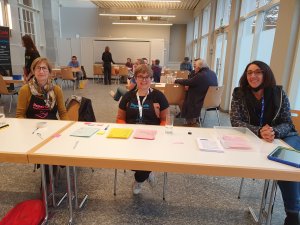
My school has a very strong mission and vision to which I feel strongly aligned. We strive to make the world – or our corner of it – a better, kinder place. As an IB World School this matches the IB mission that helps “to create a better and more peaceful world”. This allows me the freedom to lead CAS that has environmental edges. This year we had great success with a collaboration between a local “Verein” (association), Repair Cafe Zug and the local Gemeinde (town government) Baar that I established. Twice a year we provide a service to people who would like their items repaired. This encourages a reduction in consumption and a move to a circular economy. This is a general trend in environmental awareness with governments subsidising this, legislation being written for the “right to repair” and the hope that happiness does not need consumption. Another successful initiative was the first (in our current era) local PDW (personal development week). We spent one week in Zurich with chef and food activist, Andi Handke, learning about the food cycle; how food travels from a farm, is processed, transported, wasted, eaten and celebrated and how the global food system is a key lever in the fight against climate change. So what does it mean to be “too IB”? I’ve heard that I am not alone in facing this accusation, in schools which have “other” focuses. Does it mean that I struggle to see other perspectives? Perhaps. Does it mean that I may have more expertise and see other perspective than the accusers? Possibly. Does it suggest a conflict between my desire to be part of a network of like minded people and others that want to pursue individualist goals? Perhaps. The way forward is to listen, ensure perspectives are acknowledged but to stay true to my values and support young people in their journeys. My work on positive psychology and the book Flourish by Martin Seligman has helped in this regard.
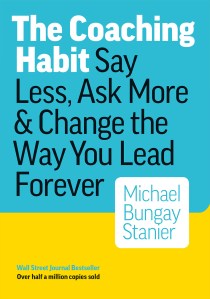
Through my mentoring and the two courses (coaching and culture) that I have taken with the ECIS Middle Leaders certificate group I’ve reflected a lot on leadership and coaching. In addition to the courses, I read “The Coaching Habit” by Michael Bungay Stanier. One of the remarkable things I have learned through the thinking I’ve done on coaching is that it is a remarkable tool for self-reflection. The suggested strategies and questions to use as a coach are just as useful as a self-reflection tool. One key learning is to ask yourself what you really want and avoid swimming upstream. I also really appreciated, and have used, the Karpman Drama Triangle. In the course with Helen Morgan on Coaching and Leadership I loved the idea of coffee machine coaching as a strategy but was cautioned by a colleague in another workshop I took this year, with more coaching experience, sometimes it’s good to ask, “would you like a coaching conversation about this?” Sometimes people just want a chance to rant and move on! The best lesson was actually from a video in this course with the key piece of advice, “stay curious just a little bit longer”. It was an important reflection for me that people may feel under-valued if you interrupt and so there is great value in quietening your mind to stay curious.
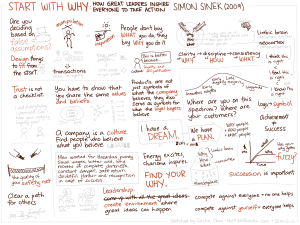
The value of taking these courses is the opportunity to see that there are many common challenges and many ways to solve them. In the Culture of Leadership course, led by Jimena Zalba and Cindy Vega, I recognised that there may be a path in the development of culture in a school aligned with its development as a complex system. I’ve now been in my school for over 15 years in which time we have grown from a school of 170 students in grades 7 to 12 with MYP and APs only, to a full IB continuum school with over 1300 students and about 450 students in the High School. During this time we’ve grown our systems and policies and some of the early challenges, such as responsibilities, an absence of a mission and hierarchical leadership have now been displaced by the challenges of complexity in distributed leadership and identity in living our mission and vision. I also solidified my own vision for leadership which revolves around service, empowering others, learning and the power of networks.
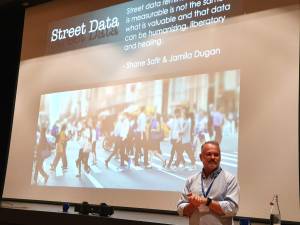
Further professional learning, and personal highlights were attending my first IB global conference since 2018 in Den Haag and participating in the Chapters International workshops, held at my school, with Ron Ritchhart. The first was a single day and titled, “Leading and Coaching a Culture of Thinking” followed by a weekend of “Cultures of Thinking in Action: An Inquiry into 10 guiding Mindsets“. I first learned with Ron in a week-long workshop on Cultures of Thinking in Amsterdam back in 2009 and I generally credit this workshop as transforming my teaching and approach to school relationships. These workshops refreshed me on Ron’s work on cultural forces, design for thinking and introduced me to the concepts of stance and an animating core which connects to the learning on coaching and culture of leadership. I was curious about the link between the first book I read for our school professional reading group, Culturally Responsive Teaching and The Brain by Zaretta Lynn Hammond and how I use routines and rituals in my classroom. My students tell me that I create a very safe space where they enjoy learning but I suspect that I could do more to elevate to student thinking by challenging myself to be more explicit with my metacognition and that of my students. As part of this workshop I’m lucky that we have a follow-up call with Ron to challenge us with our thinking. These workshops continued to help me reaffirm what I believe in as an educator and who I am. Attending the IB Global Conference was a joy, being part of such a diverse community but all with a common desire to make the world a better and more peaceful world. I saw colleagues that I hadn’t seen for years, got to know my own colleagues better (how often do you eat and play together) and meet new colleagues from around the world. Highlights for me were interdisciplinary learning in the DP by Amber Ruth Kohl from Collegio San Carlo, Milan, Basel International School’s work on their development of a Curriculum Review Cycle, Angeline Aow and Katierose Deos, Berlin International School, on “Leveraging our Professional Learning Community’s Strengths” and the plenary by Conrad Hughes, Geneva International School, with the themes of The Coalition to Honour all Learning, increasing access to this education and the need and work to decolonise the curriculum.

By being networked and involved in learning beyond the school boundaries I have found affirmation and a strengthening of my confidence. In February and September I led IB workshops for teachers of Environmental Systems and Societies. It was wonderful to learn alongside these teachers. Although many are new to either IB teaching or this course, I always learn something from each of them. I had participants from the USA to Australia and China, Europe to the Middle East and North to South Africa. ESS is such a unique course that the participants come from diverse backgrounds and as the course requires an embedding of examples and case studies, this can be leveraged to strengthen confidence, interest and learning for students. I also presented a podcast to over 100 teachers on Paper 2 for teachers signed up to ESSgurumantra’s podcasts. The feedback from these events was incredible and reminded me that I have a lot to give, helping others with their learning.

I’ve spent a lot of time learning more about the ESS domain as we review the curriculum to be fit for 2030 and add a Higher Level component. I have had to learn more about environmental law, economics and ethics (see the latest Curriculum Review document on MyIB) and continue to update myself as the environment throws the biggest challenges our world faces. I recently read, and wrote about, COP15 for the Convention on Biodiversity which took place in Montreal in December 2022 and led to 23 environmental targets that nearly 200 countries agreed to. This overlaps with my current reading by George Monbiot, “Regenesis“. The biggest drivers of biodiversity loss are agriculture and overfishing with, at the moment, hunting, mining, logging, climate change, pollution and invasive species in supporting roles. My school has a strategic goal to become net carbon zero by 2027 and to develop an environmental framework. A workshop on sustainability at our school, with a diverse range of stakeholders, concluded that we wanted to be leaders in this field. I’m now fired up to push on with this work and will attempt to increase student voice in these developments and to target meat consumption as a “low-hanging fruit” in this work. Schools as sustainable organisations have an ethical responsibility and should be educating and modelling strategies to decrease our reliance on meat consumption. Food production contributes almost 35% of greenhouse gas emissions globally. Meat consumption tends to be a very controversial target due to large amounts of cognitive dissonance as was seen in the response to the German Environment Ministry’s decision to serve only vegetarian food at official functions. The G7 meeting in Bavaria in the summer of 2022 was meat free. If they can do it, then so can we. These messages are important symbols of what we value as important. They are part of our identity and yes, we can do it!
 zoesenvironment