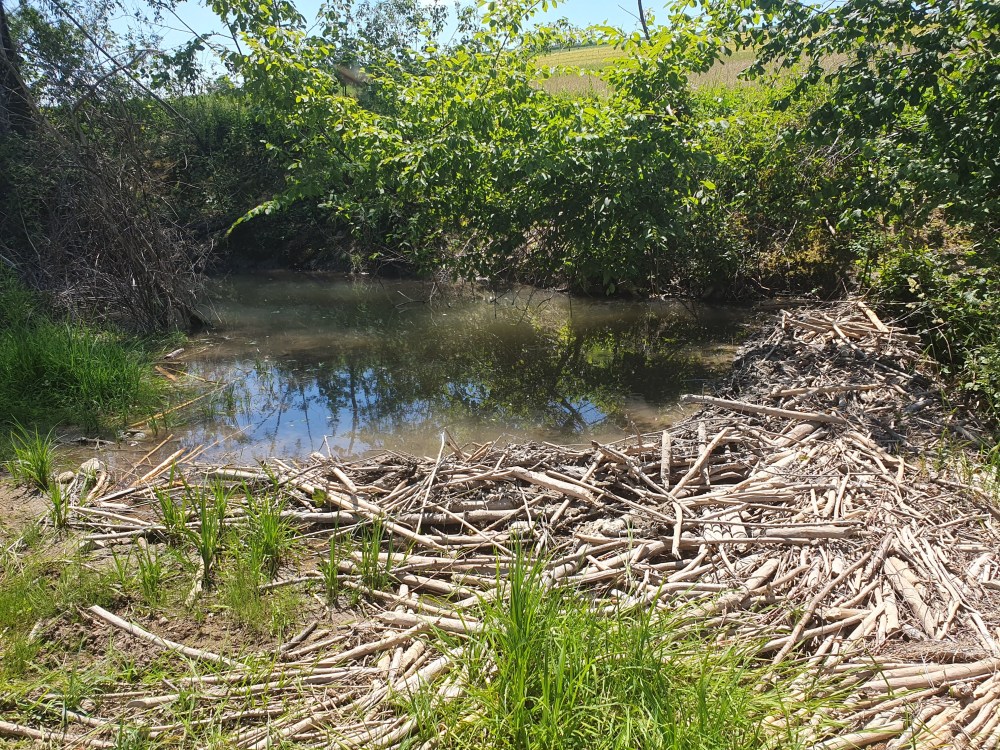
The world is boiling. That was the message I started my last blog post with in August 2023. I was just starting my new, yet undefined role, exploring sustainability at ISZL and IB innovation, and I was going to need to employ all my sense-making skills re-ignited by Nora Bateson‘s Warm Data training. The summer had been hot, and environmental limits were obviously being broken all over the place. That screams urgency. It screams, Greta Thunberg urgency, “I want you to act as if the house is on fire, because it is.” – World Economic Forum, Davos, 24 January 2019. But that’s not how large schools work. It’s not how policy development works, and with a broken economic system, it’s not how the world works. The activist within was going to need to be quiet. I would need patience, listening, and to grow influence slowly for this new role.
I don’t read or watch the news so much now. I can’t. My mental health won’t take it. I’m doing a lot to take personal responsibility for our current situation, controlling what I can control. I am, however, taking every opportunity to meet people who think differently, who are working in the liminal spaces, and together we are influencing where we can.
Liminal spaces are those in the in between, the spaces on the edges where transitions are taking place. In ecology, this often results in diversity, where ecosystems merge to form an ecozone. In complexity science, these areas are where phase shifts can happen, sudden changes that move a system from one state to another. Existing in these liminal spaces has a degree of uncertainty, but also a sense of possibility and excitement.
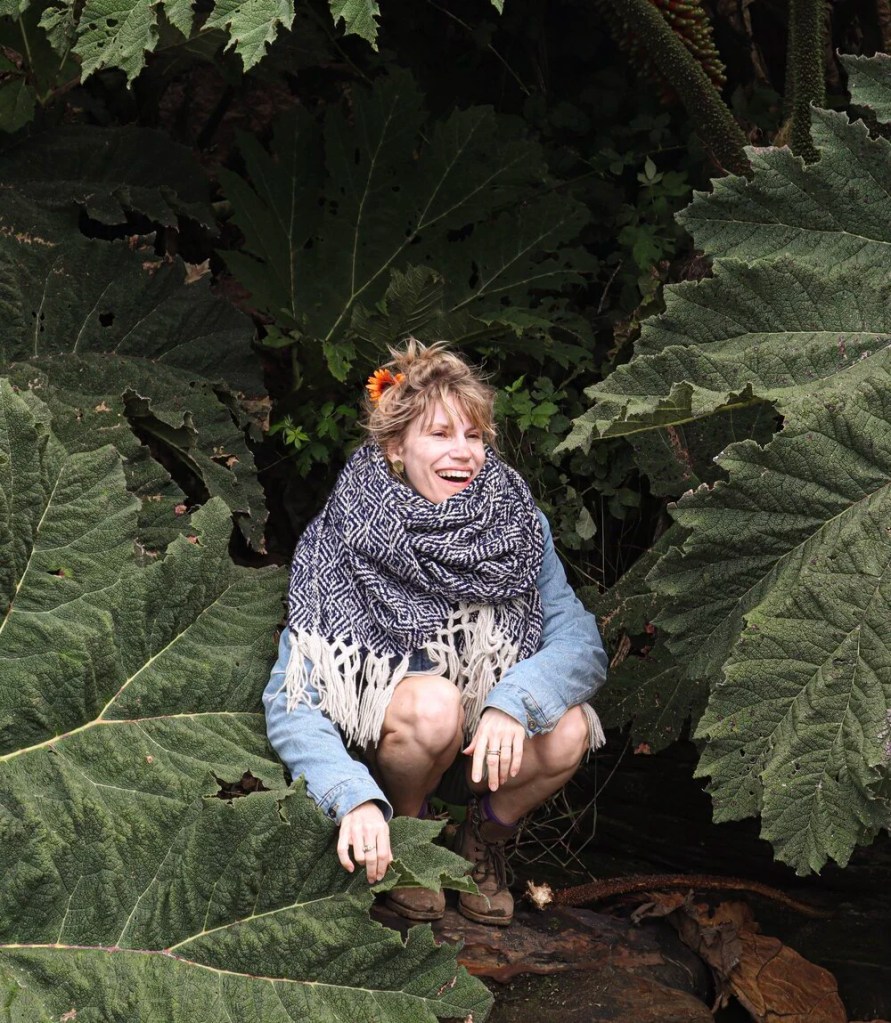
I was introduced to Carine Gibert by my mentor, the wonderful Sarah Kupke at ECIS. Carine is a sound artist, environmental activist, and educator, and the founder of Grounded in Motion. She has an EP of sonic poems, Honouring the Holocene and a variety of pieces through collaborations on the Rights of Nature campaigns. Carine is a partner with the Earth Law Center, and she is currently bringing students to the Ecocentric Law Summit in New York City. Students will be reading letters written in her course that emphasise humans as a regenerative species.
As we talked and learned from each other, I knew that I wanted to expose my students to Carine’s way of thinking. We are hoping to collaborate in person, providing students with an opportunity to connect with nature through art, but for the moment, Carine has been zooming into my class to talk about her work with the Rights of Nature movement. Although not explicitly mentioned in the ESS (IB Environmental Systems and Societies) Guide (2024), there is room for connection in the way that people perceive and value nature, the way we can use legislation to protect nature (environmental law), and the way that we think about the rights of others than humans (environmental ethics). Carine enriches the students’ perception of the world beyond their often-narrow world experience. We are planting the seeds for those connections for students so that they can grow a richer, more diverse worldview with a sense of hope and possibilities.
Jennifer Brandsberg-Engelmann contacted me immediately after the publication of my last blog and said, “Hey, it looks like we are on the same path”. Jennifer and I had crossed paths a few times through our work on the new ESS guide, but that quick message has led to a rich and profound friendship. Jennifer had taken the leap out of the classroom to work on writing a Regenerative Economics textbook and lead the charge to promote a paradigm shift in economics teaching. She is collaborating with teachers and students worldwide to bring an economics that supports all life on Earth into practice. At the same time, she works with national and international curriculum authorities to embed these ideas into mandated curricula.
Jennifer has been able to attend our Youth Forum Switzerland, leading workshops on regenerative economics and zooming into our Sustainability Cafe presentation to celebrate the prize-winning essay of two of our students on the topic of “Beyond GDP”. After reading The Serviceberry, An Economy of Gifts and Abundance by Robin Wall Kimmerer, I contacted Jennifer, suggesting that it would be a perfect summer read for students of ESS and Economics. Jennifer’s activities focused on reciprocity, mine on the idea of worldviews, cycles, and gift economies. Again, going beyond the direct written curriculum, we are reaching beyond our liminal spaces and generating new ways of thinking about the world. One student reflected,
“When I first started reading this book, I was a bit sceptical because it used quite high language and reading the first few pages I wasn’t too sure how it would be related to Economics and ESS. However, after getting into the book I really understood that it was a whole different way of thinking about life. A lot of the times, as I was reading, I was shocked and thought to myself “I never thought about it like that”. This book really opened a whole new way of thinking to me and now I understand more the relationship between nature and economics and our responsibility as humans to get together and take care of our planet.“

Jan Dijkstra, the Sustainability Lead at Ecolint, The International School of Geneva, introduced me to the TED talk by Lyla June soon after we started exchanging ideas in our Sustainability roles. Seeing the possibilities and hope, I showed this talk to my ESS students, wanting to share Lyla June’s thinking. Again, not connected to our official guide (this was the old course with no links to Indigenous knowledge), I sowed the seeds, and two students chose to write their Extended Essays on Indigenous land management and our connection to nature. The next year, with the new course emphasising Indigenous Knowledge and how we value nature, I created an activity to use the TED Talk more directly. Again, two students were inspired to write their Extended Essays on how Indigenous Societies relate to nature. On a personal level, this has led me to take a course with Gaia Education, led by Lyla June, on Indigenous Knowledge Systems. Already, in one week, I feel inspired to continue to think beyond my traditional scientific training. The other participants bring such a rich diversity of thinking that I can feel my synapses tingling, challenging me, helping me to unlearn and learn again. I even discovered an alumnus of mine in our call last night. I’m surrounded by the hope I found in my warm data training again.
Diya Kanoria was an ESS teacher at a neighbouring school whom I helped as she started out on that path. Now she’s the founder of Make the Change and organising Systems Thinking and Design Thinking -inspired courses and camps for young people and Regenerative Learning workshops for adults, hoping to reframe how we think about education. Diya led a Climate Fresk for some of my students, and now, moving from the liminal to the mainstream, they’d like to become trainers themselves.
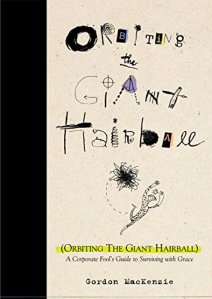
Tim Logan introduced me to a book, Orbiting the Giant Hairball by Gordon MacKenzie, which helped me understand the challenges and possibilities of living in a liminal but influential and inspiring space within an organisation. More hope. More possibilities.
Jenny Gillett has been leading an inspiring group of educators around the world in designing a new IB course called Systems Transformations. The first iteration is at Atlantic College UWC, followed one year later by the UWCSEA, and this year, 2025, Upper Canada College, Toronto and Mulgrave School, Vancouver, are joining the pilot. Each school is following a different iteration of the same framework, testing out new models before the course (actually, it counts as 2 SL subjects) goes live in 2030. As an examiner for this course, it is one of the most inspiring and hopeful moves in IB education. Students are assessed on their engagement with Systems Thinking and Systems Transformation in a practical, yet academically robust manner. There are no end-of-course exams, but four assessments, completed during the course, and developing competencies that will prepare the students to be the leaders we need in this complex world. Now, if that is not hopeful, and keeping me sane in my liminal space, then I don’t know what can.
 zoesenvironment
Thank you, Zoe, for sharing so many wonderful resources and connections. And thank you for teaching me the term ´Liminal Spaces´.
LikeLike
Hi Kathryn, Many thanks for the comment. Hope you are well.
LikeLike